Warhammer 40,000: Tacticus Review
Warhammer 40,000: Tacticus Overview
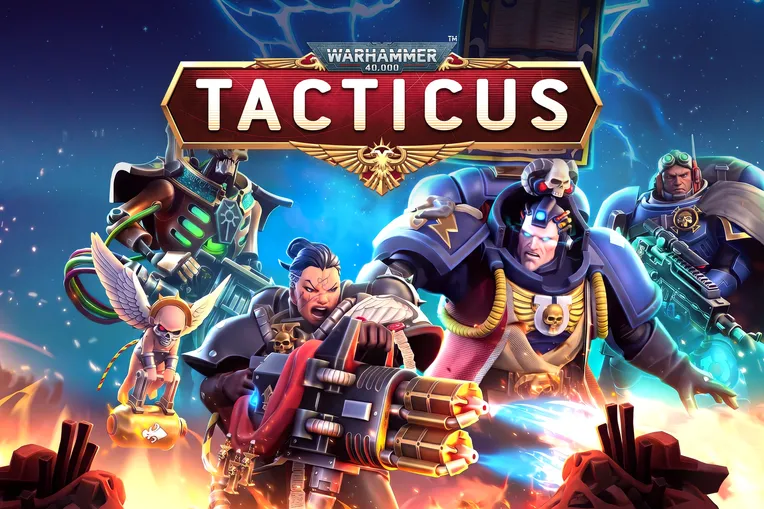
Warhammer 40,000: Tacticus turns the setting's hulking armies into brisk, approachable squad tactics without sanding away their faction identity. Snowprint Studios developed and published this free-to-play strategy RPG for iOS and Android, launching it on August 15, 2022. It is built for players who like compact tactical puzzles, famous 40K faces, and a roster that always needs one more upgrade.
Campaign narrative comes from Warhammer writer Matt Forbeck, while regular updates continue to bring new factions into the fight. That makes it welcoming for curious newcomers, but the real treat is seeing Ultramarines, Necrons, Orks, Chaos forces, and other tabletop fixtures squeezed onto one tiny hex grid. There is only room for five fighters, so even the galaxy's endless war has to respect mobile screen space.
Warhammer 40,000: Tacticus Gameplay and Core Loop
The best part of Tacticus is how much tactical personality it packs into battles that can be finished within a few minutes. You command a squad of up to five units on a hexagonal battlefield, moving each warrior before choosing a basic attack or special ability. Movement ranges, attack types, armor, armor penetration, and positioning all matter, but the controls keep that information manageable.
Five units, several ways to cause trouble
Characters are more than different stat blocks. Each has distinct movement, attacks, abilities, and a role shaped by its faction. A unit might shove enemies out of position, while a Necron Overlord can summon reinforcements based on fallen allies. Simple rules produce sharp choices: claim useful ground, focus fire, protect a vulnerable specialist, or gamble on an ability that could flip the battle.
Terrain adds another wrinkle without turning every map into homework. Razorwire, for example, can halt movement and make its victim take additional damage. Those interactions reward a quick scan before charging forward like an overexcited Ork. Restraint is occasionally permitted in the 41st millennium.
A typical 20-minute visit can fit several compact fights around a burst of roster maintenance. You clear campaign encounters or arena skirmishes, collect materials, improve characters, and head back out with a stronger squad. Auto-replay lets eligible completed missions produce rewards at a small cost, trimming repetition when a particular upgrade material is the real target.
Campaigns carry the tactical weight
The linked campaigns provide the main run of handcrafted encounters, with dialogue around battles and bosses closing their chapters. Their faction matchups sell the setting particularly well: the Indomitus campaign features Ultramarines and Necrons, Fall of Cadia pits the Black Legion against the Astra Militarum, and Octarius brings Orks into the argument. Matt Forbeck's narrative gives those clashes more context than a bare procession of combat nodes.
The wider mode list keeps your roster busy. Arena supplies competitive battles, Onslaught throws waves of enemies at your squad, Salvage Run mixes enemy clearing with treasure collection, and guild play includes cooperative fights against huge bosses. Some side modes have been criticized for offering less challenge than the campaigns, but they also provide quick routes to extra materials. Whatever mood you bring, Tacticus can usually find something that needs shooting.
Is Warhammer 40,000: Tacticus Pay-to-Win?
Tacticus is playable for free, but spending buys enough roster growth and competitive leverage that its PvP can fairly be called pay-to-win. The Google Play listing identifies in-game purchases that include random items, and the gacha structure ties important character acquisition to requisition pulls and shards. Money can accelerate access to units, materials, and power, which matters when your squad meets somebody else's in the arena.
The pressure is not subtle forever. Frontline Gaming counts at least eight currencies that players regularly track, while energy, tokens, and other entry limits determine how often certain rewards can be pursued. Google Play reviewers also complain about expensive character packs, repeated shard drops, luck-heavy requisitions, and events that favor established accounts. That is the paywall in plain Low Gothic: progression can slow until patience or a wallet breaks the deadlock.
Still, free players have a sensible route through it. Campaigns and PvE modes let you develop a preferred squad over time, and the game does not require constant direct PvP. Saving requisitions until ten are available is the commonly recommended move because that bundle guarantees a character, although it may still produce one already represented in your collection. Treat purchases as acceleration rather than permission to have fun, hoard pulls, and accept that whales will climb faster. The tactics remain enjoyable even when your credit card stays safely behind the Golden Throne.
Warhammer 40,000: Tacticus Progression and Endgame
The long-term hook is building a broad war chest of characters, then feeding upgrades into the squads needed for campaigns, events, arena, and guild battles. Between fights, materials raise character power and unlock improvements, while new units expand the combinations available on the hex grid. Regular faction additions give collectors fresh targets and stop the roster from feeling sealed in amber.
That growth also forms the game's biggest progression wall. Campaign difficulty eventually demands stronger units, but the materials needed to reach that strength are tied to repeatable missions and limited attempts. Some campaign bosses are presented as unlockable characters without simply joining your roster when defeated, so victory may reveal another collection goal rather than hand over the prize. Tactical skill can improve a result, but it cannot always substitute for the required upgrade level.
The smart approach is to build with purpose. Concentrate resources on a campaign-capable core instead of sprinkling every material across the entire collection, use auto-replay for targeted farming, and save requisitions for the ten-pull guarantee. Once that foundation is secure, Onslaught, arena ranks, timed events, and guild bosses give specialized characters more reason to leave the display cabinet. The grind is real, but so is the pleasure of watching a scrappy five-unit squad grow into a compact engine of heretic removal.
Is Warhammer 40,000: Tacticus Worth Playing?
Warhammer 40,000: Tacticus is worth playing for its fast, readable battles, sharply differentiated characters, and generous spread of 40K factions and modes. Snowprint found a strong mobile shape for turn-based tactics: small maps, meaningful positioning, and just enough roster fiddling to make the next battle tempting. The campaign structure gives the fighting direction, while PvP and guild bosses provide somewhere to point all that accumulated firepower.
40K fans, squad-building obsessives, and players who enjoy daily progression will find plenty to love. Anyone who hates gacha pulls, time-gating, or competitive spending should skip it. For everybody between those poles, start free, hoard those requisitions, and see how much trouble five tiny warriors can cause.