Star Trek Fleet Command Review
Star Trek Fleet Command Overview
Star Trek Fleet Command is a free-to-play Star Trek MMO strategy game about building a starbase, growing a fleet, recruiting famous officers, and surviving a galaxy full of factions, alliances, and opportunistic captains. Scopely and Digit Game Studios launched it on November 29, 2018, and it now spans Android, iOS, Windows, and MacOS, so the big hook is simple: your command chair follows you across mobile and PC.
This is Star Trek through a 4X and RPG lens. You expand. You upgrade. You send ships into systems for missions, mining, battles, and trouble. Then the game asks the dangerous question every management game asks: what if one more timer, one more officer shard, one more ship part, one more refinery pull would make tomorrow’s fleet noticeably meaner?
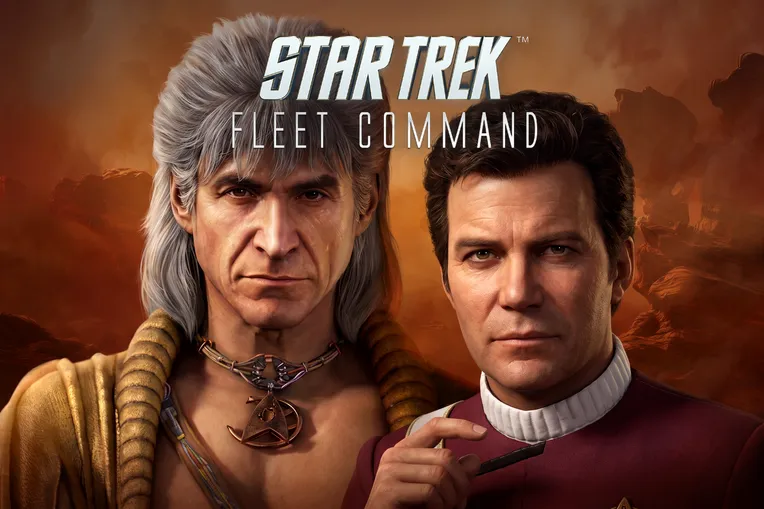
The license does real work here. The game began around the Kelvin timeline, with names like Kirk, Spock, McCoy, Scotty, Sulu, Uhura, and Nero, then later brought in arcs and characters from Discovery, The Original Series, The Next Generation, Lower Decks, Strange New Worlds, Deep Space Nine, and Enterprise. That gives the whole thing a collector’s itch beyond raw power. You are not only chasing stats. You are chasing your bridge crew.
It is best for players who like strategy games as a habit, not a weekend snack. If your idea of fun is plotting upgrades over days, joining an alliance that actually chats, and watching your fleet creep from “please do not shoot me” to “hello, neighboring system, I have opinions,” this is very much your quadrant.
Star Trek Fleet Command Gameplay and Core Loop
Star Trek Fleet Command works because its core loop keeps stacking small captain decisions: build the base, tune the fleet, send ships out, cash in resources, then use the haul to push a little farther. It is a management game with a Star Trek skin, yes, but that undersells how many plates it keeps spinning once the MMO layer wakes up.
Your starbase is the engine room
The starbase is your home, your workshop, your piggy bank, and your big flashing target. The official site describes a base built around mines, refineries, facilities, and defenses, and that tells you the rhythm immediately. You improve buildings to open stronger upgrades. You refine raw materials into usable progress. You protect what you have because other players exist, and some of them have clearly chosen violence before breakfast.
This base-building layer gives the game its sturdy backbone. There is always a practical question in front of you. Do you feed research? Push ship construction? Strengthen defenses? Improve production? The fantasy is grand, but the choices are wonderfully fussy. Very Starfleet, honestly. Somewhere, a quartermaster is smiling at a spreadsheet.
Ships give the galaxy teeth
Ships are your hands in the universe. They mine, fight, travel, and carry officers into danger. As players level up, they build newer and bigger ships, improve weapons and tech, and assign officers for RPG-style bonuses. That officer layer matters because the game is not only asking whether your hull is large enough. It is asking who is on the bridge and what that crew does best.
Federation, Klingon, and Romulan faction flavor gives the galaxy a clean strategic shape. Scopely describes Federation officers as leaning into defense and endurance, while Romulan officers spread attention across health, defense, and offense. That kind of identity is exactly what a licensed strategy game needs. Kirk should not feel like a generic stat stick in a novelty uniform.
A short check-in has a lot of buttons
A typical 20-minute play window, as the game’s systems are described, is busy in the best mobile MMO way. You can collect production, start or finish upgrades, send a ship to mine, nudge research forward, pick up missions, deal with faction business, claim event progress, peek at alliance chat, and decide whether the nearby hostile, mission target, or player ship is worth poking.
Early play is gentler. The WhatCulture Gaming review describes the climb up to level 10 as mainly PvE, a stretch where players learn the mechanics, build the station, upgrade facilities, improve research, and get better ships. At level 10, PvP enters the picture. That is the moment the galaxy stops being a theme park and starts being a neighborhood with grudges.
The result is a loop with good friction. You are rarely just tapping a shiny claim button. You are setting up the next useful move. A miner here. A mission there. An upgrade that will make tomorrow’s objective less rude. Then alliance chat pings, and suddenly the sensible plan has been replaced by group activity, raid talk, or someone demanding backup like the galaxy’s most dramatic group project.
The MMO layer is the secret sauce
Alliances are not window dressing. Scopely pitches them as groups that offer assistance, battle, raid, and chat every day, and that social layer is where the game finds its biggest personality. Solo progress can carry the first stretch, but the game’s stronger identity is communal: shared goals, alliance tournaments, raids, territory pressure, and the constant knowledge that other captains are building while you are building.
That is why the game lands differently from a purely solo Star Trek RPG. The ships and officers matter, but so does the room you are in. Get into a lively alliance and the galaxy gains gossip, tactics, rivalries, and the gentle panic of coordinated timers. Space is big. Alliance chat makes it messy. Good messy.
Is Star Trek Fleet Command Pay-to-Win?
Star Trek Fleet Command has clear pay-to-win pressure because spending can speed progression and strengthen competitive options, but patient free players can still enjoy the PvE, collecting, alliance play, and long-term growth if they set smart expectations. That is the honest answer. This is a free-to-play MMO with gacha and strategy systems, not a boxed Star Trek campaign that politely leaves your wallet alone.
The game sells acceleration. Player criticism across Metacritic and community discussions repeatedly circles the same cluster: grind, paywalls, time-gating, event pressure, and whales pulling away faster than casual captains can comfortably follow. Some users also complain about bugs, lag, crashes, failed event launches, and weak support responses. That is not background noise. That is the part of the galaxy where the red alert stays on.
The pay-to-win question gets sharpest around PvP and high-end progression. If one player can spend to reach stronger ships, officers, upgrades, and event rewards faster, the competitive field tilts. A Metacritic user complaint even points to frustrating power gaps where lower-level players can threaten higher-level ones, which underlines how messy the combat environment can feel when progression systems, matchmaking realities, and power investment collide.
Here is the important player-friendly read: the spending pressure is real, but it does not erase the game’s appeal if you treat it like a long campaign rather than a race against the biggest spender on the server. Free-to-play captains should join an active alliance, avoid chasing every event, protect resources carefully, and pick progression goals instead of trying to swallow the whole Alpha Quadrant in one sitting. The fun path is discipline, not panic. Very Vulcan. Slightly annoying. Correct.
Star Trek Fleet Command Progression and Endgame
Star Trek Fleet Command is built for long-term progression, with the early PvE tutorial arc giving way to faction reputation, alliance dependence, resource planning, PvP pressure, and an expanding content calendar. The game wants to become part of your daily routine, and its systems are arranged like a conveyor belt of future problems you will absolutely try to solve.
The early game teaches you the knobs
The early stretch is about learning what everything does. You improve the starbase, unlock and upgrade systems, strengthen ships, assign officers, and work through missions while the game introduces combat, resource gathering, and travel. It is friendlier than the later game because the main pressure is comprehension. What does this building unlock? Why is that ship better? Which resource is suddenly missing? Why is Spock involved in a menu? Normal captain questions.
That onboarding matters because the game has many overlapping meters. Base level, ship strength, officer progression, research, faction ties, and resource pipelines all feed each other. The game’s trick is making each improvement feel like a rung on a ladder. The next system is out there. The next ship is possible. The next officer upgrade might make your crew click.
Midgame is where the bill comes due
The midgame shifts the mood. PvP is active, upgrade requirements grow, and resources become more contested. The gamedevelopers.ie review notes that mid and late stages can lean into an endless number of upgrades, with resource demands and time investment becoming heavy. That is the grind. Not a secret room. Not a rare monster. The grind is standing in the hallway wearing a Starfleet badge.
Still, this is also where the game becomes more interesting for the right player. You stop treating upgrades as a checklist and start treating them as strategy. Which ship deserves investment? Which faction path supports your goals? Which alliance activities are actually worth your time? The best long-term mindset is selective ambition. Build a plan. Ignore shiny bait when it does not serve that plan. Let someone else mortgage a moon for a leaderboard.
The endgame is social, competitive, and constantly fed
Scopely’s PC launch announcement describes Fleet Command as an expanding MMO with live updates, major franchise arcs, and a huge amount of collective player activity, including more than 14 billion battles and over 500 million hours played by that point. The exact live shape keeps changing, but the direction is clear: new arcs, new ships, new officers, alliance features, tournaments, incursions, and multiverse business keep giving veteran players reasons to log back in.
That makes the endgame less about “finishing” and more about finding your lane. Some players chase faction power. Some care about alliance wars and raids. Some collect favorite officers because having a ridiculous bridge crew is half the point. Some just want to keep the starbase humming while the galaxy yells around them.
The smart expectation is that progress slows as the weeks stack up. That is not unusual for a live MMO strategy game, but Fleet Command feels especially committed to the marathon. If you like your games with daily planning, alliance politics, and the smug little joy of a completed upgrade timer, it has the long tail to keep you scheming.
Is Star Trek Fleet Command Worth Playing?
Star Trek Fleet Command is worth playing if you want a Star Trek strategy MMO with starbase management, officer collecting, alliance drama, PvE missions, and PvP danger all pushing the same long-term captain fantasy. It is busy, hungry, social, and sometimes cheeky with your time, but it also understands the core appeal: build the fleet, recruit the legends, push deeper into space, and let other players make everything unpredictable.
You will love it if you enjoy slow-burn strategy, faction planning, collector RPG hooks, and alliances that turn a menu-driven game into a living group chat with torpedoes. You should skip it if pay-to-win pressure, grind, timers, or whale-dominated PvP are dealbreakers. Simple as that.
For everyone else, the best move is to start smart: play free, join a good alliance early, pick goals, and let the galaxy open at your pace. There is a lot of Star Trek here, and when the base, crew, fleet, and alliance pieces start clicking, that “one more upgrade” thought gets dangerously persuasive. Engage.