Rise of Cultures Review
Rise of Cultures Overview
Rise of Cultures makes history feel like a giant construction set, letting you raise several cities, unlock cultures, meet famous figures, and push an empire from the Stone Age onward. InnoGames released this free-to-play strategy game on February 17, 2021, and it is available on iOS, Android, and browser.
This is chiefly a city builder and management game. You arrange buildings, balance production, research technologies, explore territory, and trade goods. Multiplayer features focus on alliances, chat, trade, and cooperation, while combat takes the form of strategic PvE battles. That split suits players who want neighbours without having those neighbours flatten the roof every Tuesday.
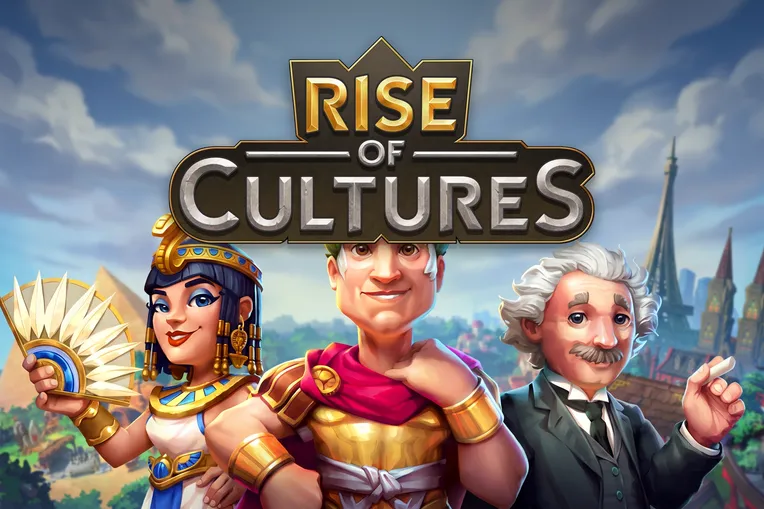
The historical theme supplies plenty of momentum. Caesar joins battles, Cleopatra introduces Egyptian traditions, and Einstein helps frame later scientific progress. It is history served with a broad grin rather than a textbook, and that makes every new culture an inviting target.
Rise of Cultures Gameplay and Core Loop
The core loop mixes thoughtful city layouts with production management, research, exploration, trade, and real-time PvE combat. A typical short check-in revolves around gathering completed production, deciding what the city needs next, improving buildings, advancing research, and preparing troops. If bronze is piling up while wool is scarce, trading with another player can keep the imperial machine clanking forward.
Your streets are part of the strategy
Placement matters because cultural sites can boost nearby production buildings. That turns decoration into a practical tool: put the culture bonus beside whatever currently matters most, then reshape the district as your priorities change. The best layouts are working diagrams of your economy rather than neat rows of pretty houses.
There is a small irritation tucked inside that idea. Google Play reviewers criticise quests that demand maximum happiness, since meeting the requirement can mean moving cultural sites and surrounding buildings around briefly, then shifting everything back. It is fussy busywork. Still, the underlying culture bonus gives layout decisions a real purpose, and watching buildings develop across the eras supplies a satisfying visual reward for all that municipal shuffling.
Battles ask for more than a troop pile
Combat is strategic PvE with real-time mechanics, supported by troop training and military research. Players explore the world map, expand their influence, and meet historical characters along the way. Community reviews particularly praise battles for requiring some strategy rather than rewarding a simple flood of units.
Recruitment is the pressure point. Google Play reviews flag troop waits that can stretch to 30 to 60 minutes between battles, which breaks the rhythm if combat is your main attraction. Treat battles as one branch of a larger routine, however, and the pause becomes time for construction, research, and trading. There is always another corner of the empire asking for attention, probably while waving an invoice for wool.
Is Rise of Cultures Pay-to-Win?
Rise of Cultures is better described as pay-to-speed than pay-to-win, with optional purchases easing waits rather than replacing its planning and PvE strategy. InnoGames states that the game is free to play without restrictions, while offering in-game purchases. There is no documented competitive ladder where a whale can simply buy the right to crush everyone else, and the main battles are PvE.
The sharper criticism is time-gating. Player reviews report that production can slow dramatically and that paying becomes tempting when jobs take much longer to finish. Long recruitment timers create the same pressure around combat. That can feel like a soft paywall if you expect to chain battles and upgrades for hours.
Patient players still have a sensible free path: queue production, use culture bonuses where they matter most, trade missing goods, and let several city systems advance together. Spending buys pace, but careful planning remains the heart of the game. If you enjoy checking an empire a few times a day, the free model fits that rhythm rather neatly.
Rise of Cultures Progression and Long-Term Play
The long-term hook is watching humble settlements become an empire of multiple cities, with each era opening fresh cultures, technologies, buildings, and territory. Progress depends on economic management and success in PvE battles, so expansion feels tied to both the city map and the campaign beyond it.
Every era gives the skyline another story
Buildings visibly develop as civilization advances, a feature community reviewers single out as especially satisfying. Research pushes the timeline forward, while new cultures and famous characters keep the journey from becoming one endless upgrade queue. Regular events and updates add further material, and InnoGames has continued developing new eras such as 1100 C.E.
The climb does tighten. One Google Play review describes the third through fifth eras as notably difficult, while other players report that progress slows quickly when they refuse frequent purchases. The smart approach is to resist rushing: prioritise the production currently blocking advancement, place cultural sites beside those buildings, maintain trade relationships, and keep research moving while troops recruit.
That measured pace is the point. Rise of Cultures works best as an ongoing empire project, something you return to for the next building, technology, trade, or patch of map. One more upgrade becomes one more era, and suddenly Caesar is waiting for marching orders.
Is Rise of Cultures Worth Playing?
Rise of Cultures is an easy recommendation for patient city-building fans who want meaningful layouts, historical progression, alliance trade, and battles woven into the usual production loop. Its strongest trick is giving every part of the empire a job: cultural sites improve output, research opens the road ahead, trade patches economic holes, and PvE combat turns preparation into expansion.
You will love it if rearranging districts and planning tomorrow's resources sounds satisfying. You should skip it if long timers make you reach for a battering ram. For everyone between those camps, the free entry makes this a splendid excuse to claim a patch of Stone Age dirt and start teaching it architecture.