Grepolis Review
Grepolis Overview
Grepolis is a long-running strategy MMO that lets you build an Ancient Greek city, raise armies, trade with nearby villages, and turn territorial ambition into a multiplayer career. InnoGames launched it on December 8, 2009, and the free-to-play game now spans browsers, iOS, and Android.
It is aimed squarely at players who enjoy city building with consequences. Your settlement is not sitting inside a decorative bubble. Other players occupy the same world, PvP shapes the map, and expansion eventually means colonizing fresh territory or conquering existing cities. Come for the neat rows of upgrades, stay because somebody nearby has developed an alarming interest in your coastline.
Grepolis Gameplay and Core Loop
The core loop mixes construction, military growth, trade, and territorial planning, with every stronger city opening another route toward conflict or expansion. A short check-in revolves around assessing what your settlement needs next: improve the city, strengthen its forces, interact with nearby villages, or prepare for the next push across the map. Each choice feeds the same grand objective, which is to grow from a local power into the owner of multiple cities.
Your city is only the opening move
Building and upgrading provide the foundation. Better development supports military power and trade, while nearby villages give you another point of interaction beyond your city limits. That makes even routine management feel connected to the wider world. You are not arranging Greek masonry for its own sake. You are funding the next move.
The real-time structure also suits quick strategic check-ins. You can inspect development, adjust priorities, and decide whether resources should serve growth or aggression. It is a clean rhythm for anyone who likes having several plans simmering at once, preferably while looking innocent.
Spears on land, ships at sea
Combat covers both land and sea, so geography matters to how your empire spreads. Military expansion is not confined to marching into the next patch of dirt. Colonization offers a route into new territory, while conquest lets established cities become prizes in the multiplayer struggle.
That combination gives Grepolis its strongest hook. City building supplies the engine, but PvP gives the engine somewhere dangerous to go. Every upgrade can support a larger strategic intention, and every new city makes your growing empire feel more substantial. Soon that tidy settlement has become an administrative octopus wearing a bronze helmet.
Grepolis Progression and Multiplayer
Grepolis grows from single-city management into a long campaign of colonization, conquest, and multi-city control against an established player community. The early objective is easy to grasp: build up the settlement, expand its military strength, and improve trade. The longer arc widens the frame as new territories and additional cities become realistic targets.
Owning several cities changes the scale of the fantasy. You are no longer polishing one economic machine. You are managing an empire whose land forces, fleets, trade, and territorial goals all compete for attention. There is no need for a conventional final boss when the living map keeps supplying rivals and opportunities.
Longevity is one of the game’s strongest credentials. InnoGames said during the 2024 fifteenth-anniversary celebration that Grepolis had more than 75,000 daily active players, with 30 percent having played for at least ten years. That is an unusually committed crowd, and it explains why the multiplayer layer remains central rather than ornamental.
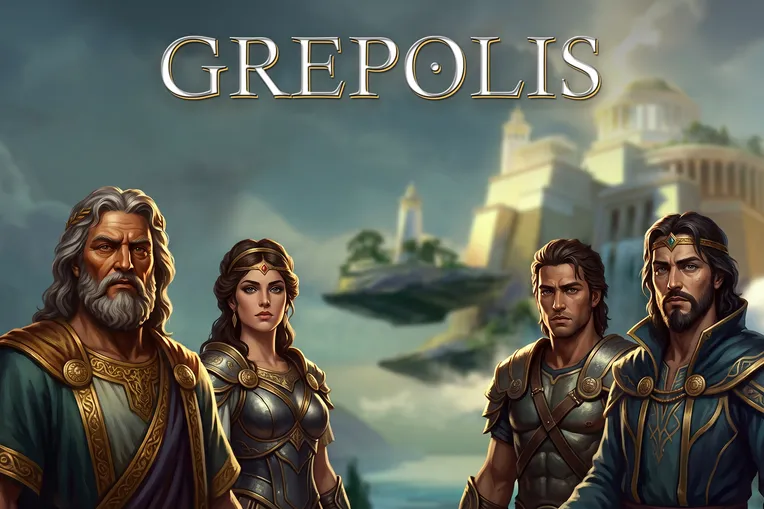
What should you know going in? MMOHuts criticizes the graphics as mediocre and the chat interface as outdated. Fair enough. This is a 2009 strategy game, and its presentation carries some of that history. Yet the same age also means years of entrenched competition and players who understand exactly how much trouble can fit around one small Greek island. For a patient strategist, that is fuel.
Is Grepolis Pay-to-Win?
Grepolis is free to start and playable without an upfront purchase, but its optional microtransactions come with documented pay-to-win concerns. MMOHuts explicitly lists pay-to-win elements among the game’s drawbacks, so competitive fairness is not something to wave away with a laurel branch and a cheerful shrug.
That matters most if your goal is to chase the strongest players and treat every territorial contest as serious business. Spending can cast a shadow over a PvP game because advantages affect more than private progress. They affect the shared map. The sensible free-player approach is to learn the building, trading, military, and colonization loops before deciding whether the competitive race deserves any money.
The fair landing is simple: the base game costs nothing to try, and its central appeal is available from the start. Build first, study the neighbors, and keep your wallet sheathed until you know how fiercely you want to compete. Very Greek. Surprisingly sensible.
Is Grepolis Worth Playing?
Grepolis is worth playing for strategy fans who want city development to lead into trade, colonization, and meaningful land-and-sea PvP. Its 4.4 out of 5 score fits a game with a clear strategic identity, extraordinary longevity, and the delicious possibility that one city can become somebody else’s geopolitical headache.
Players who love patient empire building and multiplayer rivalry should give it a shot, while anyone demanding modern presentation or competition untouched by paid advantages should skip it. For everyone else, the browser and mobile versions make the opening move easy: found your city, inspect the coastline, and start thinking several territories ahead.