Project Entropy Review
Project Entropy Overview
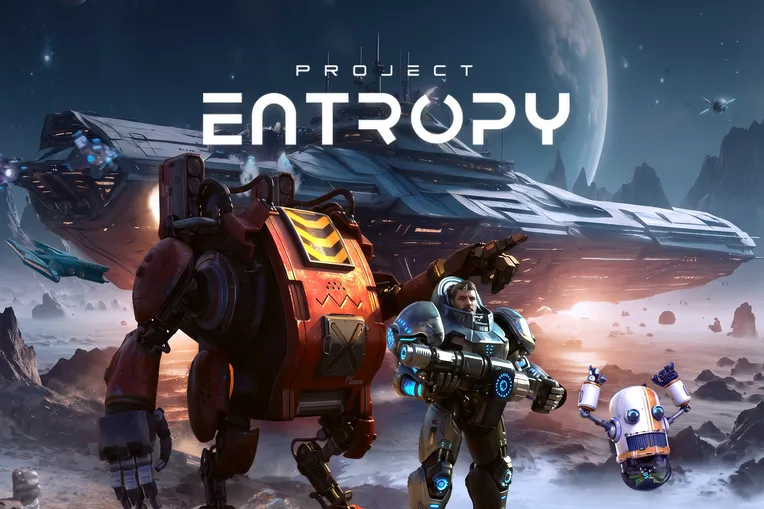
Project Entropy hands you alien civilizations, upgradeable war machines, and whole planets to conquer inside a free-to-play sci-fi strategy MMO. FunPlus International AG develops and publishes it, with versions for Windows PC, Android, and iOS. The Steam edition launched on April 16, 2024.
This is for commanders who enjoy tending a base, shaping a hero roster, and carrying those upgrades into multiplayer conflict. Civilizations have their own abilities, technologies, and units, while the wider campaign sends you toward uncharted worlds and the hostile insectoid Grod. Humanity has crossed a black hole in search of resources. Naturally, the neighbors are furious.
Project Entropy Gameplay and Core Loop
Project Entropy mixes resource collection, base construction, fleet upgrades, exploration, and space combat into a busy commander routine. Its early play is built from small, readable jobs: scout nearby territory, gather materials, renovate damaged structures, and strengthen the settlement one building at a time.
Your cosmic to-do list fills quickly
Footage of the opening shows food, energy, and metal feeding construction. A solar plant needs upgrading, builders are limited, and fresh outposts must be rebuilt before they become useful. That gives a typical 20-minute stretch a clear rhythm. One minute you are vacuuming up supplies, the next you are repairing infrastructure and checking which improvement can be afforded next.
It is approachable base-building rather than a wall of galactic bureaucracy. Objectives point toward the next practical task, while the expanding map gives all that harvesting somewhere to lead. There is always another patch of space asking to be explored, claimed, or scrubbed clean of Grod. Very inconsiderate bugs, those.
Heroes, hardware, and heavier guns
Recruitable heroes add roster management to the economic loop. You can improve their skills, equip stronger weapons, and arrange a fleet command around attack and defense. Vehicles and armaments can also be customized, so growth is spread across your settlement, named characters, and military hardware rather than trapped in one upgrade tree.
The civilizations provide another strategic layer through distinct technologies and units. That variety should appeal if you enjoy adjusting a force around your preferred style instead of marching one fixed army forever. Battles, planetary conquest, and PvP then supply a purpose for all those rising numbers. Your solar plant is not merely sitting there looking shiny. It is funding trouble.
The main concern is repetition. One published first-impressions video concluded after roughly an hour that the loop felt boring and time-consuming, which tracks with how often gathering and upgrading appear in early footage. Yet players who find satisfaction in constant construction, incremental gains, and fleet tinkering are precisely the ones most likely to click with it. Complete a task, improve the base, point the warships at the horizon. Nice and tidy.
Is Project Entropy Pay-to-Win?
Project Entropy is free to play, but the available store information does not establish enough about purchase advantages to label it definitively pay-to-win. No reliable breakdown identifies its paid currencies, pack prices, purchase limits, or exactly how spending affects competitive power, so declaring either a harmless shop or a whale-controlled battlefield would be guesswork.
That uncertainty matters because this is an MMO with PvP, hero upgrades, weapons, vehicles, and civilization development. Any paid shortcuts touching those systems could affect competition, but their actual impact is not documented here. The sensible free-player approach is simple: learn the economy, join the multiplayer layer, and see where time-gating or upgrade pressure appears before opening your wallet.
Since entry costs nothing across PC and mobile, you can judge that balance without buying admission. Keep your card holstered until the game has earned the privilege. Your fleet will cope with the emotional distance.
Project Entropy Progression and Endgame
Project Entropy builds its long-term hook around stronger heroes, improved fleets, expanding technology, and multiplayer competition. The settlement supplies your forces, hero skills raise their value, and customized vehicles and weapons push attack and defense upward. Those linked tracks give regular players several targets to chase rather than one lonely level bar.
The grind is the galaxy
Over time, the focus shifts from repairing individual structures toward refining a broader war machine. Civilization bonuses and technologies shape your options, while fleet composition and hero development give you reasons to keep gathering materials. Planetary conquest and PvP are the natural destinations for that preparation, although the available descriptions do not define a formal endgame structure or competitive tier system.
Steam user reviews are mixed, with 51 percent of 275 reviews listed as positive. That split fits a progression loop likely to depend heavily on your appetite for repeated collection and improvement. If each new weapon, skill level, or claimed outpost feels like progress, there is plenty here to maintain your checklist. If you need dramatic mechanical changes every evening, the routine may start showing its bolts.
The smart opening strategy is to protect scarce builders, prioritize the resource chain, and avoid scattering upgrades across every available system at once. Establish the economic engine first, then let your heroes and fleet become the expensive little monsters they were born to be.
Is Project Entropy Worth Playing?
Project Entropy is worth trying if alien empire-building, hero optimization, and steady base growth sound like a pleasant way to lose track of a few evenings. It offers a broad sci-fi fantasy at no entry cost, wrapping planetary exploration, civilization technology, customizable hardware, and multiplayer conflict into one commander-sized package.
Players who love methodical upgrades and roster planning should give it a shot. Anyone allergic to resource gathering, repeated construction, or uncertain free-to-play pressure should keep expectations measured. The Steam reception is mixed for a reason, but the core pitch remains tempting: build the outpost, assemble your heroes, and send something heavily armed toward the next planet.