FragPunk Review
FragPunk Overview
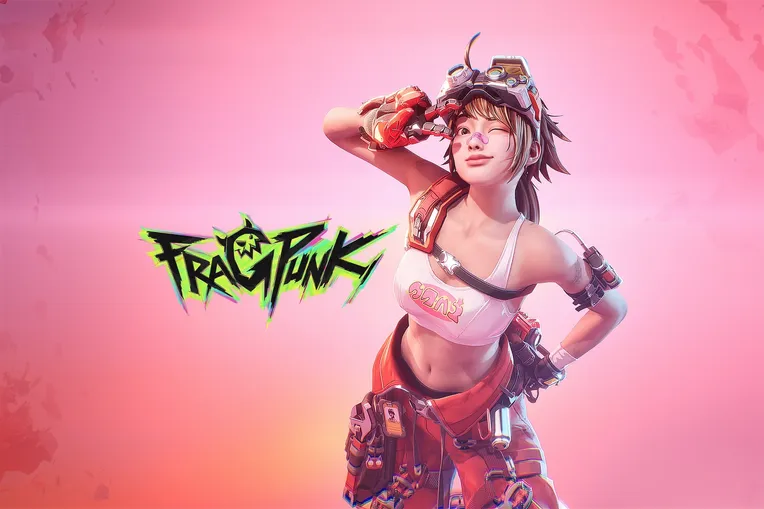
FragPunk’s killer idea is simple: take a 5v5 hero shooter, deal each team rule-bending Shard Cards, then let the resulting nonsense loose. Bad Guitar Studio’s free-to-play FPS combines Lancer abilities, a broad weapon selection, and cards that can grant buffs, trigger attacks, or slap the opposition with debuffs. Familiar foundations, gloriously meddled with.
Published by NetEase, it launched on Windows on March 6, 2025. PlayStation 5 and Xbox Series X/S followed on April 29 after technical challenges delayed the console versions. It is built for players who want competitive shooting with an extra strategic wrinkle, although co-op fans also get a dedicated PvE mode, Toy Front Line. Pick your Lancer, mind the cards, and prepare for the rules to misbehave.
FragPunk Gameplay and Core Loop
FragPunk keeps its firefights lively by letting Shard Cards alter what each round demands from both teams. The basic rhythm is readable: two teams of five bring distinct Lancer powers and firearms into battle, while the card system changes the conditions around them. One round might lean on a useful buff. The next could saddle your opponents with a nasty debuff or put a powerful attack into play. Same trigger fingers, different headache.
Shard Cards keep poking the rulebook
The cards supply the game’s clearest identity. You still need to aim, position, and use your chosen hero’s abilities properly, but the match is never governed by gunplay alone. Your team must account for whichever modifiers enter the round, then work out how aggressively to exploit them. That gives strategy a seat beside reflexes without turning the whole thing into homework.
A typical short session therefore moves between recognizable FPS action and quick tactical reassessment. Choose a Lancer and weapon setup, read the active card effects, then adjust before the opposing team makes better use of them. The system can produce abrupt swings, which will irritate anyone demanding perfectly fixed competitive conditions. For players who enjoy adapting on the fly, however, that volatility is the point. The rulebook has been handed a marker pen and questionable supervision.
Lancers and guns still have to carry their weight
Cards do not replace the hero-shooter foundation. Each Lancer brings powers to the fight, while the weapon selection gives you another layer of choice. That separation matters: your character ability and your gun are dependable tools, while Shard Cards provide the chaos around them.
GamingBolt described the overall multiplayer experience as competent but mostly derivative, which is a fair limit to set on the praise. Strip away the card mechanic and plenty of the structure will feel recognizable to regular hero-shooter players. Put those cards back in, though, and FragPunk earns its invitation to the party. Every modifier asks whether your usual plan still works, or whether it should be quietly escorted from the building.
PvE offers a breather from competitive scraps
FragPunk also gives you targets that will not send an angry message after the match. Toy Front Line shifts into squad-based PvE, sending your team against monster waves instead of other players.
Toy Front Line’s Endless Mode pushes that idea further. Squads protect the Core or try to survive endless waves while working with random Shard Cards, blessings, and a Lancer perk system. It is still online and there is no single-player campaign. Sometimes the monsters are enough drama.
Is FragPunk Pay-to-Win?
FragPunk has no established pay-to-win advantage, but its launch economy deserved the criticism it received. PCGamesN reported that the game launched with nine currencies and costly microtransactions, citing frustrated Steam reviews and a mixed Steam rating at the time. IGN and PC Gamer raised similar concerns. That is too much financial clutter for a shooter that already asks you to track heroes, weapons, cards, and several ways of being exploded.
Bad Guitar Studio subsequently simplified part of that system by merging Lancer skin keys and weapon skin keys into one Skin Key. More importantly, the documented complaints do not establish that purchases grant direct competitive power. Calling it pay-to-win would therefore outrun the evidence.
The smart free-to-play approach is wonderfully boring: play first, learn which modes and Lancers keep pulling you back, and do not spend until the currencies make sense. The entry price remains zero, so you can judge the gunplay and Shard Card system before opening your wallet. Keep your cash holstered until the game earns it.
FragPunk Progression and Live Updates
FragPunk’s long-term hook comes from an active seasonal game whose updates have added Lancers, maps and modes, and keep reshaping its Shard Cards. It is currently in Season 6, and earlier seasons added characters such as Ixchel and Wildstyle, maps such as Caesarea, and the Toy Front Line PvE mode. Limited-time Arcade modes rotate through the menu, and recent seasons have cut the Shard Card pool substantially, so the central mechanic does not sit still.
What you should not expect is an offline refuge or a narrative end point. FragPunk requires a constant internet connection, and it has no single-player campaign. Its lasting appeal rests on PvP improvement, co-op wave survival, rotating events, and the pleasure of adapting when another card reorders the furniture. Bring friends, keep one eye on balance changes, and let the seasonal machinery feed your next target.
Is FragPunk Worth Playing?
FragPunk is worth trying if you want free-to-play hero-shooter action with a clever rule-changing system at its center. Shard Cards give its familiar 5v5 framework a mischievous streak, while Toy Front Line provides an alternative when competitive play is not the mood. The monetization arrived too tangled and remains busy, but the lack of established paid combat power leaves a sensible free path.
Players who enjoy shifting tactics, hero abilities, and live seasonal updates should queue up. Those seeking fixed competitive rules, offline play, or a single-player campaign should skip it. Everyone else can deal a few cards, pick a Lancer, and see how long the rulebook survives.