Where Winds Meet Review
Where Winds Meet Overview
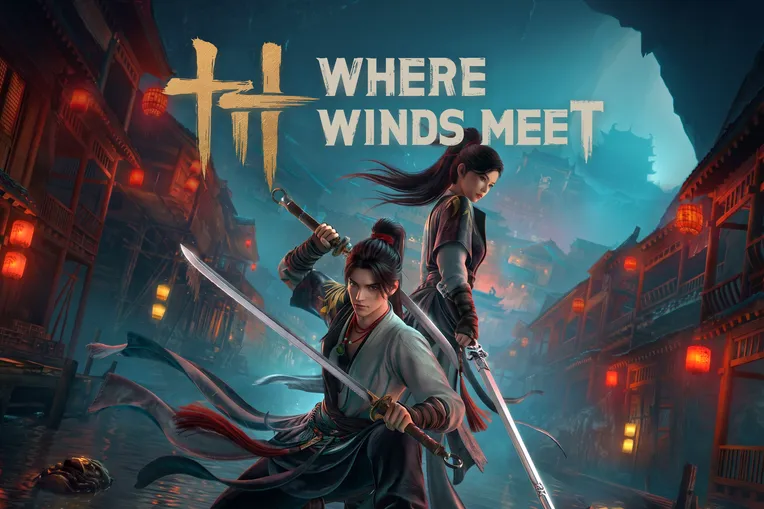
Where Winds Meet turns wuxia fantasy into a huge free-to-play playground where wandering heroes can fight, explore, choose professions, and occasionally weaponize an umbrella. Everstone Studio sets its action RPG during China’s Five Dynasties and Ten Kingdoms period, then loosens history’s collar with magic, exaggerated martial arts, and a customizable youxia hero.
You can tackle its story alone or bring other players into the picture, with cross-play and cross-progression supported across its platform rollout. Windows and PlayStation 5 received the worldwide release on November 14, 2025, followed by Android and iOS on December 12, with Xbox Series X/S joining later. Wherever you enter, the pitch is wonderfully direct: go wherever curiosity points, then solve whatever you find with scholarship, healing, swordplay, or one extremely impolite fan.
Where Winds Meet Gameplay and Core Loop
The core loop mixes third-person martial arts combat with open-world wandering, treasure hunting, quests, NPC interactions, and multiplayer distractions. A typical 20-minute stretch can send you across the countryside, into a fight, past another suspiciously tempting chest, and toward a side activity you had no intention of starting. Early footage repeatedly shows treasures competing for attention, which suits a game designed around following the flow rather than scrubbing every icon from the map.
Your weapon rack has opinions
Combat is the main attraction. Swords and spears cover the traditional hero business, while fans and lethal umbrellas push the fantasy somewhere much sillier. GamesRadar+ describes the fighting as Sekiro-style, placing the emphasis on sharp martial exchanges rather than passive number watching. The exaggerated abilities also fit the setting, where historical turmoil happily shares a room with magic and spell-punching heroes.
The concern is density. Where Winds Meet appears determined to include every activity that wandered past the studio window, and GamesRadar+ calls the result bloated but fun. That excess can scatter the game’s focus, yet the strong combat and characterful world give you a reliable reason to chase the next distraction.
Peaceful heroes still get toys
Multiplayer is not confined to combat. Fishing contests, archery competitions, and other shared diversions offer a lighter way to spend time together. NPCs can also be befriended, provoked, hustled, or given life advice. Apparently the wandering warrior’s code includes unsolicited personal coaching. Naturally.
That mixture is the game’s real trick. You can arrive looking for a serious martial arts saga, then lose an evening to villagers and fishing without leaving its broader wuxia fantasy behind.
Is Where Winds Meet Pay-to-Win?
Where Winds Meet is free-to-play, and NetEase explicitly promises that it contains no pay-to-win mechanics. The launch announcement presents a fair gameplay environment, which is the clearest available answer to the question of whether spending buys power.
NetEase has not provided a sufficiently detailed public store breakdown to judge every purchase or measure how aggressively offers are presented. There is therefore no solid basis for inventing a paywall, whale problem, or currency maze where none has been documented. The smart approach is simple: start free, learn the systems, and only consider optional spending once the game has shown exactly what value it offers you.
Where Winds Meet Progression and Long-Term Play
The long-term hook comes from an enormous story-led journey, multiple endings, character customization, professions, side quests, and multiplayer activities rather than a documented competitive endgame ladder. Everstone has promoted roughly 150 hours of gameplay, although that figure reflects the sheer quantity of activities rather than a promise that every player will want to complete every last chest and contest.
Your wanderer can pursue roles such as healer or scholar alongside the martial arts path, while appearance and clothing customization provide another layer of ownership. Story choices and multiple endings give the campaign room to branch, and the Qinghe and Kaifeng storylines are supported by side quests feeding into the central narrative.
The sensible way to approach all this is to resist completionist panic. Pick the quests, professions, and shared activities that suit your hero, let less interesting diversions drift past, and treat the map as a menu rather than homework. There is plenty here for weeks of wandering, especially if you enjoy making your own priorities.
Is Where Winds Meet Worth Playing?
Where Winds Meet is worth trying for its free entry, lively wuxia combat, unusual weapons, and almost comically generous spread of things to do. Its ambition sometimes outruns its focus, which keeps it at a good rather than exceptional 3.6 out of 5, but the same overstuffed design also means another entertaining detour is rarely far away.
Players who love exploratory action RPGs, martial arts fantasy, story choices, and optional co-op should jump in, while anyone craving a tightly edited campaign should skip the completionist checklist and stick to the main attractions. Pick a weapon, ignore the map’s attempts to own your diary, and go see how much trouble an umbrella can cause.