Tribal Wars Review
Tribal Wars Overview
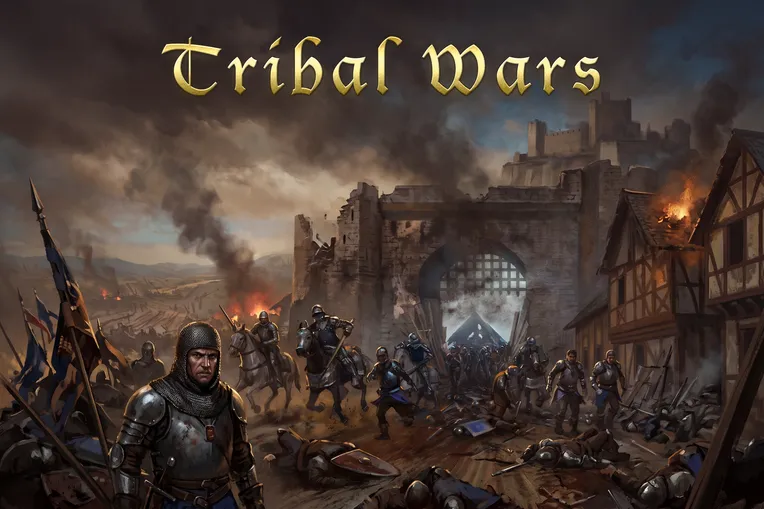
Tribal Wars turns one scrappy medieval village into a persistent multiplayer struggle for land, armies, and tribal bragging rights. InnoGames keeps the premise beautifully direct: expand your settlement, raise troops, join other players, and conquer neighboring villages before somebody has the same idea about yours.
The original began as a browser-based, text-led strategy game in 2003, and that heritage still defines it. You manage buildings and armies through practical screens rather than cinematic spectacle. Browser, iOS, and Android access also suit a game built around checking orders, plotting attacks, and keeping an eye on rivals.
This is for patient strategists who enjoy real-time PvP and social maneuvering more than flashy battlefield animation. Your spear fighters will not deliver an emotional monologue. They will, however, help turn the village next door into your village. Much better.
Tribal Wars Gameplay and Core Loop
The core loop is a satisfying cycle of gathering resources, expanding buildings, recruiting troops, and using those gains against a living map of rival players. It starts small. A clay pit and timber camp support growth, the village headquarters handles construction, and military buildings turn economic progress into something pointier.
Twenty minutes, several dangerous ideas
A short visit revolves around practical decisions. You can inspect the village, order building upgrades, recruit units through the barracks, stable, or workshop, and command forces from the rally point. Most actions run through links and text-based menus, so the emphasis stays on planning rather than dexterity.
That clarity gives every building a purpose. InnoGames lists more than 15 building types, including the academy and hiding place, alongside up to nine offensive and defensive units. Spear fighters offer humble medieval menace, while heavy cavalry represents a village that has graduated from “please leave us alone” to “your walls look negotiable.”
The economic and military halves constantly tug at each other. More development strengthens your ability to recruit and expand, but troops are what let you defend that investment or take somebody else’s. Pour everything into growth and you risk looking tempting. Focus only on soldiers and your settlement has less room to mature. That push and pull is the good stuff.
Tribes make every order matter
The social layer gives those menus teeth. Players can form tribes, coordinate with allies, and declare war on rival groups. A village is therefore more than an isolated building puzzle. It sits inside a wider contest shaped by friends, foes, and the sort of alliance drama that makes a clay shortage feel like international diplomacy.
The sparse presentation may feel old-fashioned if you expect animated clashes and lavish city views. Yet the text-led interface also keeps the strategic information close at hand. If you like games where a few deliberate clicks can rearrange somebody’s medieval postcode, Tribal Wars gets moving quickly.
Is Tribal Wars Pay-to-Win?
Tribal Wars carries legitimate pay-to-win concerns because optional purchases and premium points sit inside a persistent competitive PvP game. InnoGames states that the game is free to play without restrictions, with purchases available by choice. However, one Metacritic user review specifically criticizes both the grind and the premium-point model, so the friction is not imaginary.
The available details do not establish exactly which advantages every purchase provides, so it would be unfair to claim that spending automatically buys victory. It is equally unconvincing to pretend monetization never matters in a game built around long-term expansion and conflict. Go in expecting a free route, some grind, and pressure to value convenience when competition heats up.
The sensible approach is simple: learn the building and recruitment loop before buying anything, then judge whether the pace suits you. Joining a tribe also puts the focus back where this MMO is strongest, coordination and collective strategy. You can enter for free, find your people, and save the royal treasury until you know what deserves a coin.
Tribal Wars Progression and Long-Term Play
Long-term progression grows from improving one village into managing an empire whose survival depends on troops, territory, and tribal cooperation. The early arc concentrates on enlarging your settlement and increasing its forces. Later ambitions point outward, toward conquering neighboring villages and helping your tribe challenge stronger enemies.
Your village becomes a political statement
The best long-term hook is that expansion changes your place in the world. More buildings open a broader management problem, while a larger army creates options for attack and defense. Every captured village extends your reach, but it also folds another settlement into the empire you must command.
This is where patient players get paid back. Progress is less about reaching a scripted finale and more about accumulating enough economic and military weight to shape the multiplayer landscape. Tribes supply the wider objective: allies to support, enemies to confront, and wars that make another headquarters upgrade feel very relevant.
The grind criticism matters here because this structure asks for sustained attention. Anyone seeking a compact campaign may find the repetition wearing thin. For players who enjoy gradual growth, persistent rivalries, and plans measured across weeks, that same pace gives victories room to matter. Today, a timber camp. Tomorrow, mounted diplomacy.
Is Tribal Wars Worth Playing?
Tribal Wars is worth playing for strategy fans who want patient base-building, consequential PvP, and alliances that can transform a modest village into part of a medieval power bloc. Its text-heavy presentation shows its browser-game roots, and the free-to-play economy deserves clear eyes, but the underlying loop remains sharp: build, recruit, coordinate, conquer.
At 4.0 out of 5, it earns a solid recommendation. Patient planners and socially minded competitors should saddle the heavy cavalry, while players who need instant progress or visual spectacle should skip it. For everyone else, the browser costs nothing to open, and that neighboring village is looking awfully conquerable.