Stronghold Kingdoms Review
Stronghold Kingdoms Overview
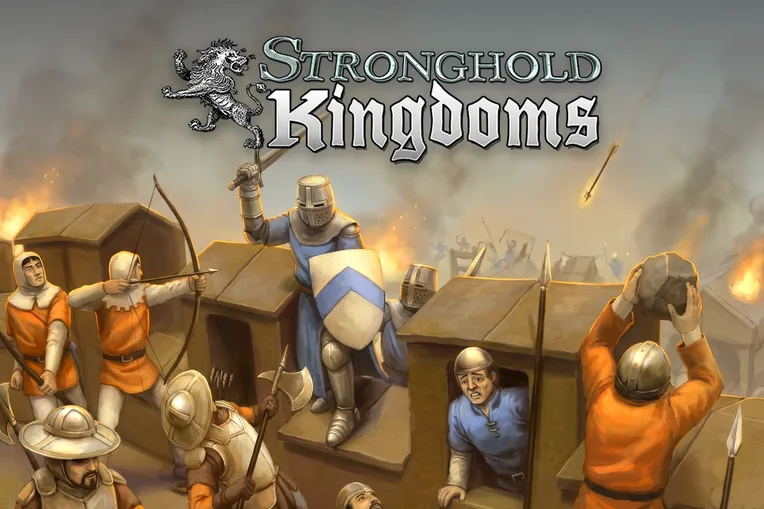
Stronghold Kingdoms turns medieval castle management into a multiplayer struggle where farms, fortifications, faction politics, and the crown all feed the same grand ambition. Firefly Studios takes the familiar Stronghold fantasy and stretches it across an MMO structure. You begin as a humble peasant, develop villages, research specializations, and gradually acquire responsibilities that extend beyond your own walls.
This is for the strategist who enjoys planning as much as fighting. Trading, diplomacy, farming, religion, and warfare all have a place, while factions, elections, liege lords, and vassals give social scheming real weight. Your castle matters, but so does knowing which neighbor to befriend before somebody starts collecting banners.
Originally released for Windows on October 17, 2012, the game later reached macOS, iOS, and Android. Its older presentation has been called outdated by MMOs.com, but the historical, semi-realistic setup still gives its kingdom-building a distinct identity. Less spectacle, more feudal paperwork with siege engines. Splendid.
Stronghold Kingdoms Gameplay and Core Loop
The core loop is a satisfying cycle of arranging production, strengthening defenses, spending research points, and turning local prosperity into political or military power. A typical short visit centers on checking village productivity, deciding where research should go, handling trade or faction business, and preparing the next improvement or attack. There is always another lever to pull.
Your village pays for your ambitions
Village planning forms the economic bedrock. Farms and cattle can support a peaceful route, while trade research helps turn production into wider influence. The official description encourages planning settlements for maximum productivity, so placement and specialization are more than decorative busywork. Every sack of grain is potentially another brick in the wall, another contribution to a faction war, or another reason your neighbor starts looking nervous.
Research provides the main steering wheel. Promotions award points that can be directed toward farming, trading, diplomacy, religion, or warfare. That lets you shape a role rather than simply climbing one universal upgrade ladder. You might become an economic backer who bankrolls allies, a diplomat working the political machinery, or the warlord currently explaining why the parish skyline is on fire.
Castles give all that bookkeeping teeth
Castle design anchors the defensive side. Firefly frames an impregnable stronghold as the heart of a lord or lady’s domain, with invading forces and player attacks providing the reason to keep improving it. On offense, you can besiege castles, pillage resources, attack faction enemies, and return with captured banners.
The clever bit is how those systems reinforce each other. Productive villages supply growth, research sharpens a chosen role, and faction membership provides targets and allies. Statistics, rankings, achievements, and titles such as Banquet King, Peacebringer, Besieger of the Month, and Lionheart give different kinds of players something concrete to chase. Even the cattle enthusiast gets a scoreboard. Naturally.
The visuals carry their age, and anyone seeking a brisk standalone campaign should remember that this is an MMO built around persistent development and other players. Accept that slower, social rhythm and the game’s many small decisions start pointing toward one delicious question: what kind of medieval nuisance will you become?
Is Stronghold Kingdoms Pay-to-Win?
Stronghold Kingdoms is free to start without a subscription or upfront payment, but competitive players should treat spending advantages as a credible pay-to-win concern. Firefly’s official page confirms the free entry point, yet the available official description does not clearly itemize what the store sells or quantify how purchases affect competitive strength. That makes a blanket claim that spending never matters impossible to support.
Community criticism is sharper. One Steam discussion post describes later play in terms of “wallet warriors,” alongside complaints about bots, hackers, and limited developer support. That is one player’s account rather than a complete measure of every world, but the language matters in a persistent PvP game where accumulated power, siege capability, and faction wars define status.
The sensible free-player approach is to enjoy village planning, research specialization, diplomacy, and faction participation without assuming that every competitive peak will be equally accessible without spending. The lack of an entry fee still leaves plenty of castle-building and political mischief on the table. Join a useful faction, choose a specialty, and let richer lords pay for the fancy tablecloths.
Stronghold Kingdoms Progression and Long-Term Play
Long-term progression grows from personal research into social authority, eventually making elections, vassals, parish leadership, and faction warfare as important as individual construction. Promotions supply research points, which steadily deepen your chosen economic, diplomatic, religious, or military role. Early goals revolve around making a village productive and a castle defensible. Later ambitions reach beyond the moat.
Factions provide the broader competitive framework. You can attack their enemies, capture banners, contribute resources to shared war efforts, and build allegiances through the game’s chat options. Elections, liege lords, parishioners, and vassals create a hierarchy in which advancement brings responsibility as well as power. At the far end sits the crown, because apparently owning several heavily fortified villages still leaves room for career development.
That long arc will suit players who enjoy gradual specialization and alliance politics more than instant tactical resolution. Rankings and achievements keep feeding smaller objectives into the larger struggle, whether you want recognition for sieges, peacekeeping, banquets, or general lionhearted behavior. The grind is part of the structure, but it has direction: each promotion opens more research choices, and each social step gives your growing domain a larger stage.
Is Stronghold Kingdoms Worth Playing?
Stronghold Kingdoms is worth playing for patient strategists who want castle design, economic planning, research choices, and feudal politics inside one persistent multiplayer contest. Its best idea is that power has several faces. A productive farmer, useful trader, calculating diplomat, and committed warlord can all contribute to the same faction drama.
Players who love slow-burn progression, alliance chat, elections, and siegecraft should feel at home. Those seeking modern graphics, a self-contained campaign, or competition untouched by spending concerns should skip it. For everyone else, the free entry makes curiosity cheap: pick a specialty, raise the walls, and start deciding which neighbor looks pillageable.