Puzzle games turn simple rules into wonderfully stubborn problems. Match tiles, arrange shapes, trace logic, test your word skills, or persuade a physics setup to cooperate. Familiar forms such as jigsaws, logic challenges, and tile matching now sit beside story-driven puzzles and frantic score chases.
Free-to-play suits the genre because you can learn a ruleset, spot its deeper strategies, and decide whether you fancy a relaxed solve or timed pressure. Some games also support browser play with no download, making it quick to get your next puzzle underway.
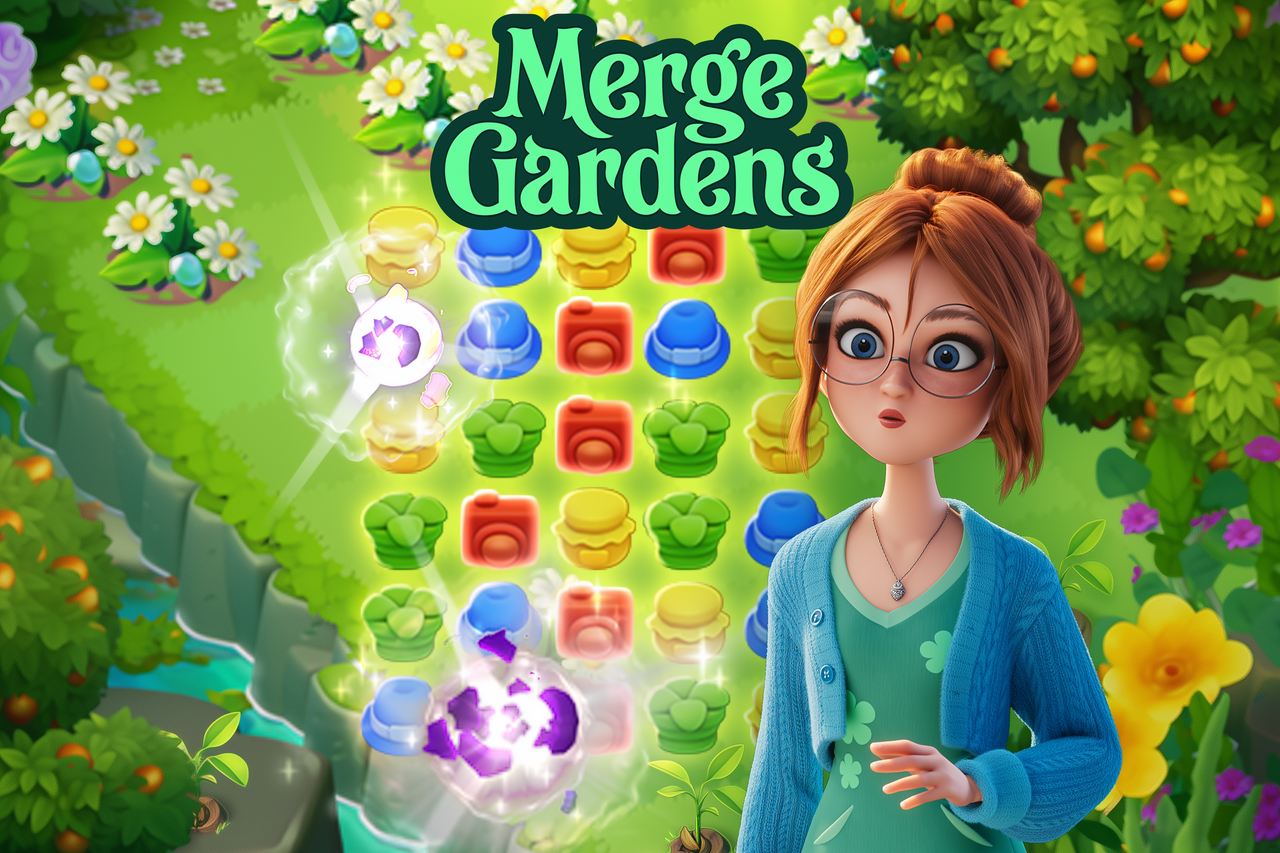
Merge Gardens turns Daisy’s inherited, overgrown estate into a three-way obsession: merge objects, crack match-3 boards, and unravel the mystery of her missing uncle. If cozy restoration with a magical-garden twist scratches your “one more merge” itch, this free-to-play charmer could happily eat your tea break.
Puzzle Games for Quick Thinkers and Patient Planners
A good puzzle gives you enough information to make that first move, then steadily reveals how much you still need to figure out. We selected and reviewed these games ourselves from our catalog, looking past the genre label to focus on the challenges they actually present.
You might be matching symbols, managing a crowded board, placing pieces in tight spaces, or untangling a logical sequence. Some puzzles reward careful planning, while timed formats add reflexes and quick pattern recognition to the mix. Our featured pick is shown at the top of the page, giving you a direct place to begin. When a challenge catches your eye, press Play Now and start solving.
Puzzle-Solving Tactics That Keep the Board Under Control
Read the objective first: Clearing pieces is not always the real goal. Check whether you need a score, a specific pattern, an open route, or a completed image before committing moves.
Scan before acting: Look across the full board for matches, blocked spaces, repeated symbols, and useful chains. The obvious move may be fine, but the move beside it may set up something much better.
Work backward from the solution: Logic and spatial puzzles often become clearer when you identify the required final position, then determine what must happen immediately before it.
Protect open space: In block-placement and tile puzzles, empty room is a resource. Avoid creating narrow gaps that available pieces cannot fill.
Separate speed from panic: Timed challenges reward fast recognition, not random movement. Accuracy creates speed, while panic mostly creates cleanup.
Test one change at a time: Physics-based puzzles are easier to read when you adjust a single object, angle, or position between attempts. Otherwise, the solution becomes a very educational mess.
Use failed attempts as clues: A miss can expose the rule you misunderstood or the sequence you mistimed. Reset with a specific adjustment, then press Play Now when you are ready to try the cleaner plan.
Puzzle Styles From Match-Three to Spatial Challenges
Puzzle is a broad genre, but its major styles ask for distinctly different skills. Your best starting point depends on whether you want pattern recognition, deduction, careful placement, or pressure against the clock.
Match-three puzzles: Create groups of matching pieces, clear the board, and plan combinations that produce stronger results.
Logic and word puzzles: Use clues, vocabulary, memory, or deduction to narrow the possible answers.
Tile and block puzzles: Place or align pieces while protecting valuable board space and preparing later moves.
Jigsaw and spatial puzzles: Reconstruct images, rotate shapes, or determine how separate pieces fit into a complete arrangement.
Physics-based puzzles: Manipulate objects and positions while accounting for movement, angles, and consistent physical rules.
Timed challenges: Solve under pressure as pieces descend, clocks tick, or scoring opportunities disappear.
Pick the style that matches your mood, from calm deduction to rapid pattern hunting, then press Play Now and give your next solution a proper shot.
FAQ
FAQs
You can tackle tile matching, jigsaws, logic problems, word puzzles, spatial challenges, and physics-based setups. The rules often click quickly, then the strategy starts tightening the screws.
Matching games and jigsaws are friendly starting points, thanks to clear goals and intuitive controls. Choose an easier difficulty while you learn the patterns, then step up when you want more bite.
Strong puzzle games build complex decisions from simple rules. They test skills such as pattern recognition, memory, logic, spatial reasoning, and planning without burying you in instructions.
Yes, puzzle games can suit older adults because many use familiar mechanics and offer different difficulty levels. Logic, matching, word, and jigsaw puzzles are good places to start.
Our featured pick is shown at the top of the page. It is the quickest place to find our current recommendation and get solving.
Yes, some games we host support browser play with no download. Press Play Now to start the game.