Browse more
All Genres →

Procedural Generation Rewards Curious, Adaptable Players
A procedural generation game uses algorithms and designer-made rules to create some of its content. A seed may determine an entire world, while other systems generate dungeon layouts, terrain, loot, enemies, missions, narrative events or attack timing. The clever bit is not randomness for its own sake. Good generation produces situations that still support the game's goals.
These games suit you if you enjoy learning systems, reading unfamiliar spaces and changing plans when the map refuses to cooperate. You carry knowledge between runs, even when your equipment or surroundings change. That makes discovery feel useful: a dangerous room pattern, scarce resource or suspiciously generous treasure pile can teach you something for the next attempt.
The strongest designs also blend generated content with handcrafted rules, landmarks or encounters. You get novelty without losing structure. There is still a route to find, a problem to crack or a world to shape, even when the particulars have been shuffled with intent.
Procedural Runs: Read the Seed and Adapt
- Learn rules, not routes: A memorized corridor may disappear on the next run. Focus on enemy behavior, resource values, movement options and the signals that reveal danger.
- Explore with an exit plan: Generated spaces reward curiosity, but pushing into unknown territory without a retreat can turn one bad room into a lost run. Keep track of safe ground and alternate paths.
- Spend for the current world: Do not cling to an ideal build when the available loot supports something else. Use what the seed gives you and shape a plan around it.
- Treat resources as information: Oxygen, ammunition, healing and upgrade materials tell you how aggressively you can explore. A sparse stretch is a cue to slow down, not a personal insult from the algorithm.
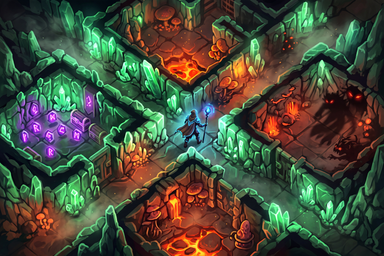
- Read repeated patterns: Procedural does not mean structureless. Room pieces, terrain layers and encounter rules often recur in new combinations. Recognizing those building blocks makes unfamiliar spaces easier to parse.
- Accept useful failure: A failed attempt can reveal trap placement rules, enemy timing or the cost of entering an area too early. Keep the lesson. Leave the doomed inventory behind.
- Use seeds deliberately when supported: The same seed can reproduce a generated world, which is useful for practicing a route or comparing strategies under similar conditions.
Procedural Systems Create More Than Random Maps
Maps are the famous example, but procedural systems can reach much further. They may shape planet terrain, distribute points of interest and loot, assemble equipment, vary mission rewards, create characters or alter narrative events in response to player actions. Some games even use procedural techniques for animation, music or simulated histories.
What matters is whether the generated content serves the play, not how much of the game an algorithm touches. A stealth layout needs useful alternate routes. A survival world needs sensible resource distribution. A puzzle needs to remain solvable. Pure unpredictability gets old fast; constrained unpredictability keeps you alert.
That balance gives the category its pull. You begin with a familiar objective, then the world rearranges the route. Adapt, learn, and make this seed regret underestimating you.