Last Fiefdom Review
Last Fiefdom Overview
Last Fiefdom is a free-to-play strategy MMO built around growing a fantasy kingdom, raising dragons, and throwing your alliance into 100v100 territorial sieges. Puzala Games Limited develops and publishes it for Windows, iOS, and Android, with the PC version available through Steam or a separate official download.
This is for the ruler who enjoys two scales at once. Down below, you are upgrading buildings, training troops, and researching technology. Up above, alliances are plotting land grabs while dragons and trebuchets make diplomacy rather loud. Steam also lists 17 interface languages, so those global alliances have plenty of room to grow.
Last Fiefdom Gameplay and Core Loop
The core loop keeps you bouncing between kingdom upgrades, military preparation, dragon raising, alliance coordination, and real-time siege warfare. A typical short visit is about checking construction, starting research, training another batch of soldiers, and nudging your realm toward its next power spike. The individual jobs are familiar, but they all feed a clear purpose: build enough muscle to claim territory with other players.
Your dragon has an appointment with a castle gate
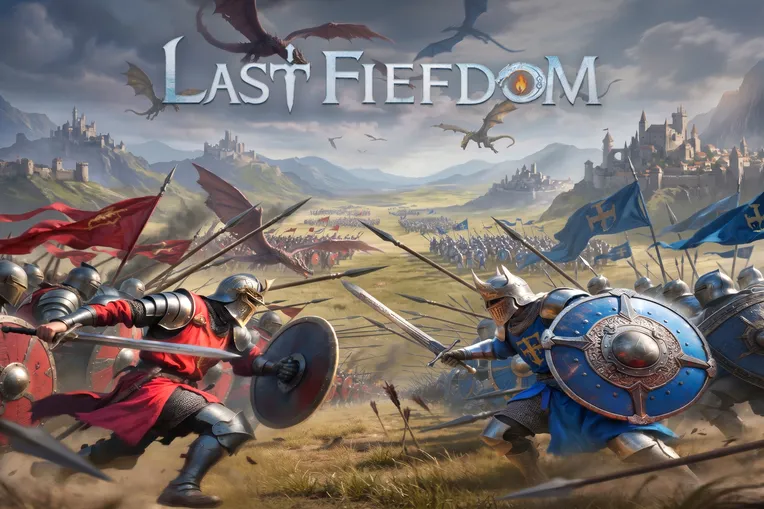
Dragons give the kingdom management a proper fantasy centerpiece. You hatch them, raise them, and add them to an army already stocked with conventional troops and siege engines. Trebuchets batter walls, armored forces push through breaches, and the promised 100v100 battles turn private upgrade plans into a very public argument over who owns the map.
The alliance layer is what gives those timers and technology choices some bite. Your next upgrade is not merely a larger number. It is preparation for a coordinated assault where players worldwide bring armies together in real time. One minute you are tending the realm, the next your alliance is discussing how many dragons a gate can reasonably withstand. The answer is more.
Google Play reviews do flag bugs, interface overlap, freezing, untranslated battle reports, and occasional progression blockers. Those complaints matter, especially beside Steam's low user sentiment, but the central pitch remains unusually direct: build the war machine, join a group, and point the whole noisy contraption at somebody else's fortress.
Is Last Fiefdom Pay-to-Win?
Yes, Last Fiefdom sells competitive advantages through Gold, packs, and purchases containing random items, so paying players can accelerate beyond free players. Google Play explicitly labels the game as containing in-game purchases with random items, while player reviews complain that access to some heroes feels heavily tied to spending.
That is the key expectation to set before your first castle brick goes down. In a territorial MMO, faster growth and broader hero access can translate into battlefield power, particularly when whales are racing ahead of the pack. Free entry still lets you build, raise armies, join alliances, and take part in the wider conflict, but it should not be mistaken for equal spending power at the competitive ceiling.
The smart route is simple: join an active alliance, treat random purchases cautiously, and decide on a firm budget before the next shiny pack starts fluttering its eyelashes. You can enjoy the kingdom-building fantasy without chasing every spender, especially if cooperation matters more to you than topping every ranking.
Last Fiefdom Progression and Player Experience
Last Fiefdom's long-term hook is the climb from a developing stronghold to an alliance-backed territorial power, with research, armies, heroes, and dragons feeding that rise. Over weeks, the emphasis shifts from getting buildings online to sharpening military strength and coordinating around larger objectives. Territory gives the grind a destination, while alliance membership turns individual progress into shared leverage.
The public response is sharply split by platform. Steam lists 19 percent positive sentiment from 21 user reviews, while the US App Store sits around 4.6 from roughly 345 ratings. That gap suggests a game whose mobile kingdom-building loop has found a warmer audience than its PC release, rather than one with a settled consensus.
Expect the familiar pressure points of a free-to-play conquest game: construction pacing, power gaps, purchase prompts, and the need for reliable allies. In return, each completed upgrade has somewhere to go. Another technology unlocked, another army trained, another castle wall waiting to discover what a trebuchet does.
Is Last Fiefdom Worth Playing?
Last Fiefdom is worth trying if you want free fantasy kingdom management that builds toward enormous alliance sieges rather than solitary city decoration. Dragons, territorial warfare, and 100v100 battles give its upgrade loop a satisfying target, and the cross-platform player base makes the alliance premise more than window dressing.
Siege fans and social strategists should feel at home. Players who dislike paywalls, random-item purchases, or timer-driven progression should skip the race for the top and play casually, if at all. For everyone else, the entry price is zero, the first kingdom is waiting, and somebody nearby has built a wall that looks far too comfortable.