Browse more
All Genres →



Retro Games Thrive on Clear Rules and Quick Payoffs
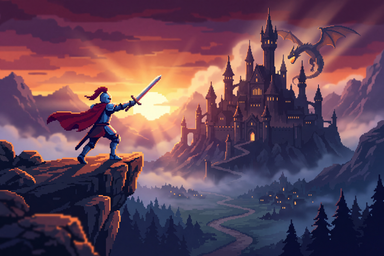
Retro is a design language as much as a date stamp. It covers the pixel art associated with 8-bit and 16-bit systems, but late-1990s 3D games can qualify too. The common thread is focus: readable mechanics, memorable stages, direct controls, and challenges that expect you to learn through repetition. If you prefer games that reveal their appeal through play rather than lengthy explanation, retro is a strong fit.
Nostalgia is part of the pull, especially for players reconnecting with formative gaming memories. Newcomers get something equally valuable: a clear view of how platformers, role-playing games, shooters, puzzle games, and arcade fighters developed their foundations. Couch co-op can add another layer, turning strict old-school rules into shared victories and lively disputes over whose fault that last mistake was. Clearly yours.
Retro Game Skills That Never Go Out of Date
- Learn the core loop first: Work out what earns progress, what causes failure, and which actions carry risk. Retro designs often build surprising depth from a small set of rules.
- Read the screen carefully: Limited visual space encouraged clear hazards, enemy patterns, and useful environmental clues. Pixel art is often giving you more information than its size suggests.
- Treat every loss as information: Genuine challenge is part of old-school design. Watch where a pattern changes, adjust your timing, and make the next attempt deliberate.
- Choose precision over panic: Fast inputs are useful, but clean timing usually matters more. A measured jump, dodge, or attack beats frantic button pressing.
- Practice difficult sections in pieces: Focus on one obstacle or pattern at a time. Once each part clicks, the complete sequence becomes far less intimidating.
- Bring in couch co-op when available: Cooperative play can transform demanding puzzles and action stages into a shared problem. Communicate roles early, especially before everyone starts improvising.
Retro Design Turns Technical Limits Into Identity
Early hardware limits pushed developers to prioritize inventive mechanics, recognizable graphics, and music that could carry a whole stage. That economy still gives retro design its punch. You quickly understand what matters, then the game tests how well you can use it.
Modern retro-inspired games can adopt that same discipline without being tied to original hardware. Pixel art now reads as a deliberate style, while tight controls, legible systems, and carefully built challenge remain the real prize. The strongest retro design looks backward for lessons, then gives you a reason to keep moving forward.