Ragnarok: The New World Review
Ragnarok: The New World Overview
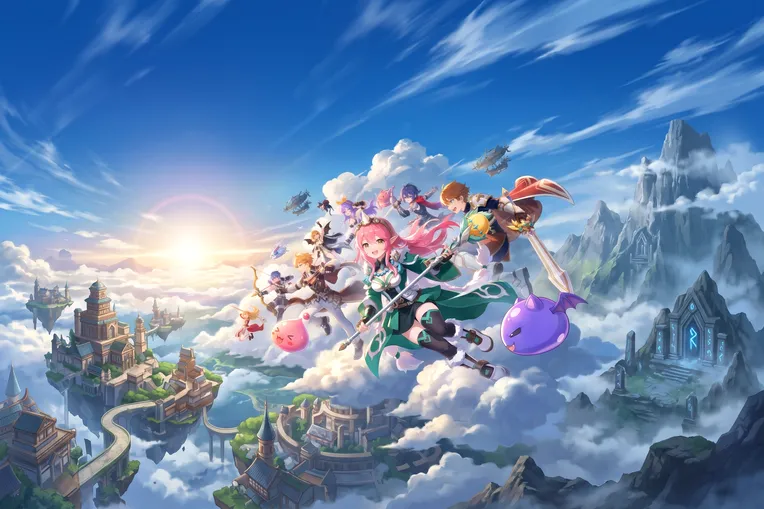
Ragnarok: The New World sells the grand tour of Midgard: one character, eight classes, a huge field to roam, MVP monsters to tame, and more than 100 looks to collect. Gravity Game Vision takes Ragnarok’s cute anime fantasy into a free-to-play, cross-platform MMORPG built around exploration, trading, parties, and social systems such as marriage.
The Southeast Asia version launched on July 16, 2026 for Windows, Android, and iOS, with PC access through Steam and the official site. Progress syncs across supported devices. If you live outside Southeast Asia, check whether the game and its servers are available in your region before installing.
This is for the Ragnarok fan who wants guild chatter, costume tinkering, and a character who keeps working after bedtime. Midgard never did respect office hours.
Ragnarok: The New World Gameplay and Core Loop
A typical session mixes open-world errands, automated combat, character upgrades, party content, and enough outfit fussing to make monster hunting fashionably late. You choose an activity, send your character into the field, gather rewards, improve equipment, and redirect that growing power toward tougher group or competitive content.
Eight jobs, one very busy adventurer
All eight classes can live on one character, including the Druid, while free skill and stat resets remove much of the anxiety from experimentation. You can swap from tanking to healing rather than rebuilding from scratch. That flexibility is the sharpest idea here: your class choice becomes a tool for the next activity, not a permanent administrative error.
Movement through the open world supports exploration and interactive puzzles, while MVP monsters can become mounts. Trading gives useful loot somewhere to go, and the large costume catalogue adds a separate collecting loop with dyeing options. Combat also feeds party play, where roles and positioning matter more than the automated field grind. Official arena clips highlight freezes, pulls, focus fire, and the Druid’s damage reduction, suggesting that coordinated groups have more to consider than raw numbers.
The grind clocks in when you clock out
Offline auto-hunting continues earning resources while you are logged out. In a short visit, that means collecting accumulated materials, adjusting your build, setting a new target, and deciding whether to chase exploration, upgrades, or a party objective. Players wanting every sword swing to demand manual attention may find that structure too hands-off. For anyone who likes an MMO that fits around a job, commute, or suspiciously long lunch break, it keeps progress moving without chaining you to the screen.
Is Ragnarok: The New World Pay-to-Win?
Ragnarok: The New World carries real pay-to-win pressure, especially around group access and competitive progression, but its free conveniences give careful players room to advance. Google Play lists ads, in-app purchases, and purchases that include random items. A long-term Steam reviewer also reports that finding parties or guilds for some content can be difficult without spending, unless you play a healer.
That is the practical definition that matters. If money helps a character reach the power or social threshold expected by serious groups, the shop is more than cosmetic. Steam’s broader reception reflects that friction: its store page lists 33% positive across 1,226 user reviews, while the more recent sample is mixed. Closed beta feedback had praised reduced monetization pressure, but the released game has not earned a clean free-to-play bill of health.
The free route is not empty, though. Offline hunting supplies materials, stat and skill resets are free, resource retrieval is available, and failed gear refinement does not reduce refinement levels. Smart players should lean into those systems, avoid racing whales, and use flexible roles to stay useful. Healing may even be your cheapest ticket into the party. Convenient.
Ragnarok: The New World Progression and Endgame
Long-term progression revolves around mastering multiple classes, refining equipment, collecting mounts and costumes, and building a place in party, guild, and arena play. The opening flexibility gradually becomes a roster of roles inside one character. Today you need a Swordman-shaped wall. Tomorrow, your guild wants healing or the Druid’s defensive support. No reroll required.
Equipment can be refined toward +15 without losing refinement levels on failure, which removes one particularly cruel form of upgrade punishment. Offline earnings and resource retrieval also soften missed days. The likely wall is social and economic rather than mechanical: competitive groups may expect enough power, spending, or role utility before bringing you into demanding activities.
That makes role choice important for free players. Learn a needed support job, keep several builds ready, and treat the arena as a coordination test rather than a wallet race. Between class mastery, MVP mounts, trading, fashion, marriage, and guild drama, there is plenty of long-term glue for players who enjoy living in an MMO rather than merely finishing one.
Is Ragnarok: The New World Worth Playing?
Ragnarok: The New World is worth sampling for Ragnarok devotees who want a flexible, social MMO and can tolerate automation and visible spending pressure. Its strongest ideas fit together neatly: eight jobs on one character, free resets, offline gains, mount hunting, trading, and a wardrobe deep enough to turn every guild gathering into an accidental fashion contest.
Players who love party roles, collection, and low-maintenance progress should give it a shot. Players seeking tightly manual combat or a level competitive field should skip the race and approach more casually. Pick a useful class, find friendly people, and let Midgard start piling up rewards while you decide which MVP deserves to become your next ride.